Millbrae sits at one of the busiest crossroads on the Peninsula, where BART and Caltrain meet and travelers move steadily between San Francisco, the South Bay, and the communities just past SFO. A schedule like that leaves little room for a full day in a classroom, which is why so many local healthcare workers and students ask about American Heart Association (AHA) Self-Guided Learning. The format lets eligible learners complete the knowledge side of a course on their own time, then handle the required hands-on portion separately. Below, you’ll see how Self-Guided Learning applies to BLS, ACLS, PALS, CPR, AED, and First Aid, which course fits which role, and how someone in Millbrae, California can line up the right option.
Key takeaway: AHA Self-Guided Learning splits a course into an independent online knowledge portion and, for provider-level courses, a hands-on skills session you complete in person. The course you should pick depends on your job, your employer’s rules, or your school’s requirements — not on whichever class happens to be most convenient.
What AHA Self-Guided Learning Actually Involves
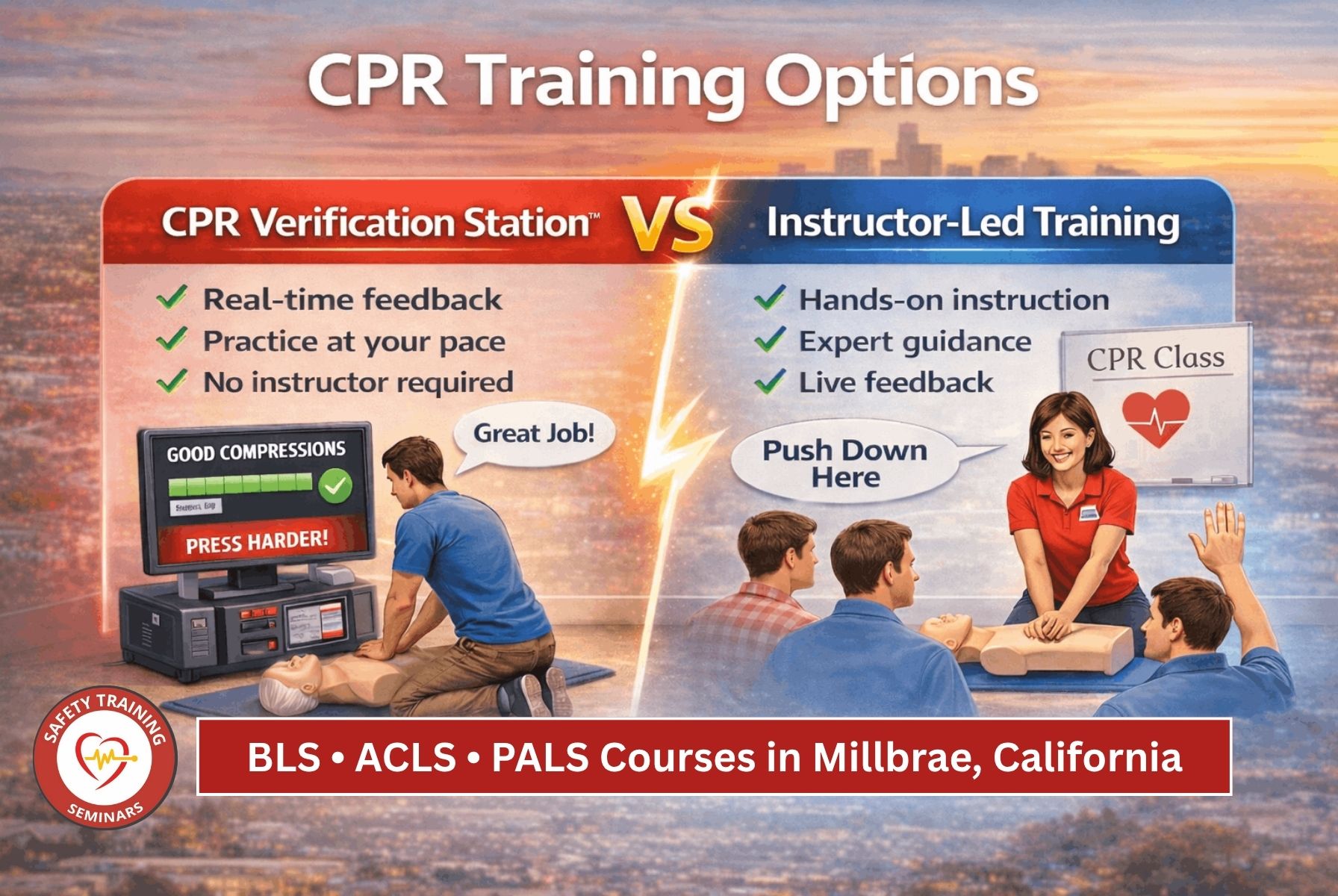
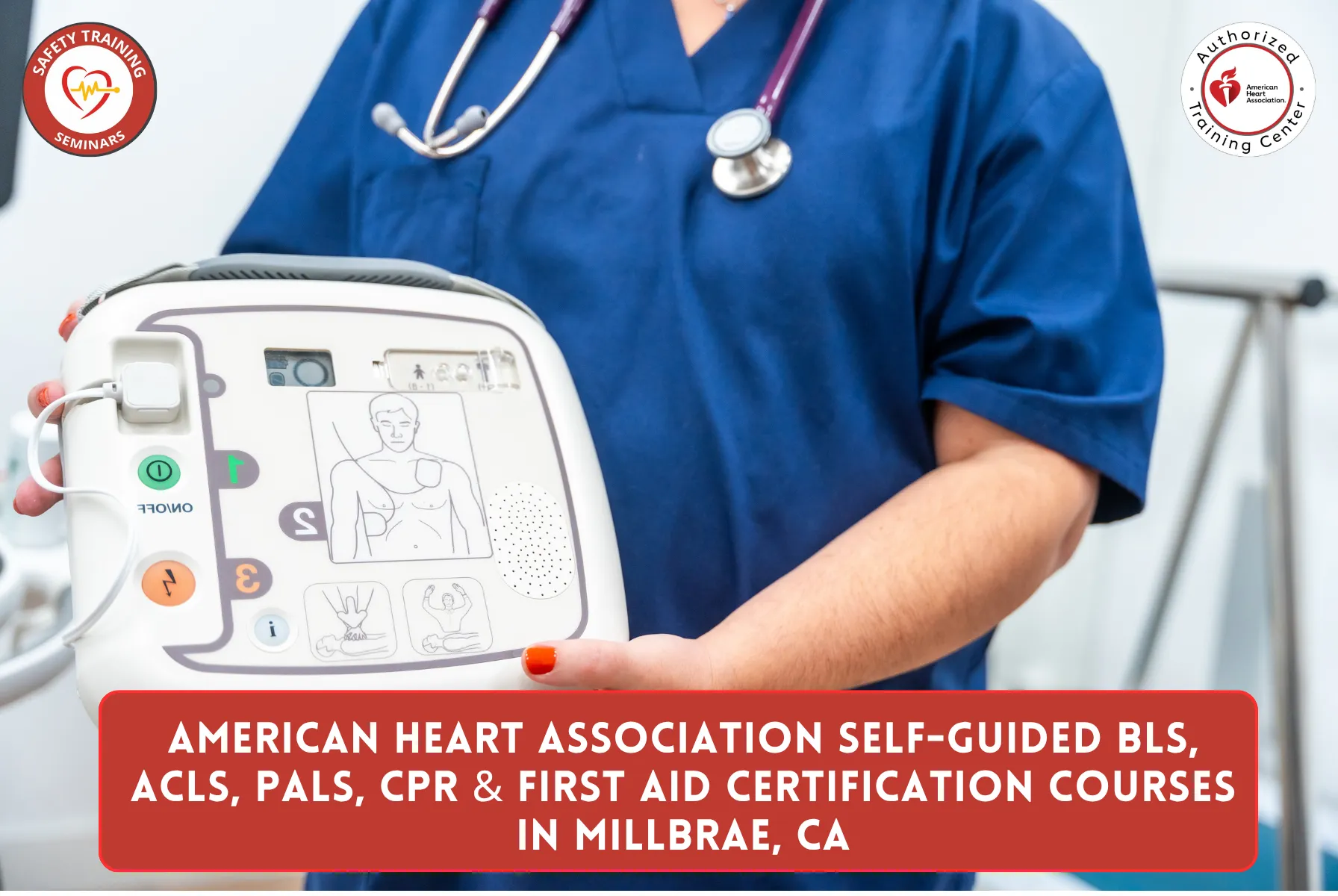
Self-Guided Learning is a delivery method, not a shortcut. You work through the cognitive material — usually an interactive online module — at whatever pace suits you. For provider-level courses, you then complete a hands-on skills session on approved equipment that gives real-time feedback, often at what the AHA calls a CPR Verification Station learning center. Passing that skills check is what finishes the course.
The general path looks like this:
- Pick the course that matches your role or requirement.
- Finish the online knowledge portion on your own schedule.
- Attend the required hands-on skills session where it applies.
- Complete the skills check for provider-level courses.
- Receive the applicable course completion card or provider eCard once you pass.
The exact steps vary by course, so confirm the format for the specific class you need before paying.
The Courses You Can Complete This Way
Basic Life Support (BLS) in Millbrae
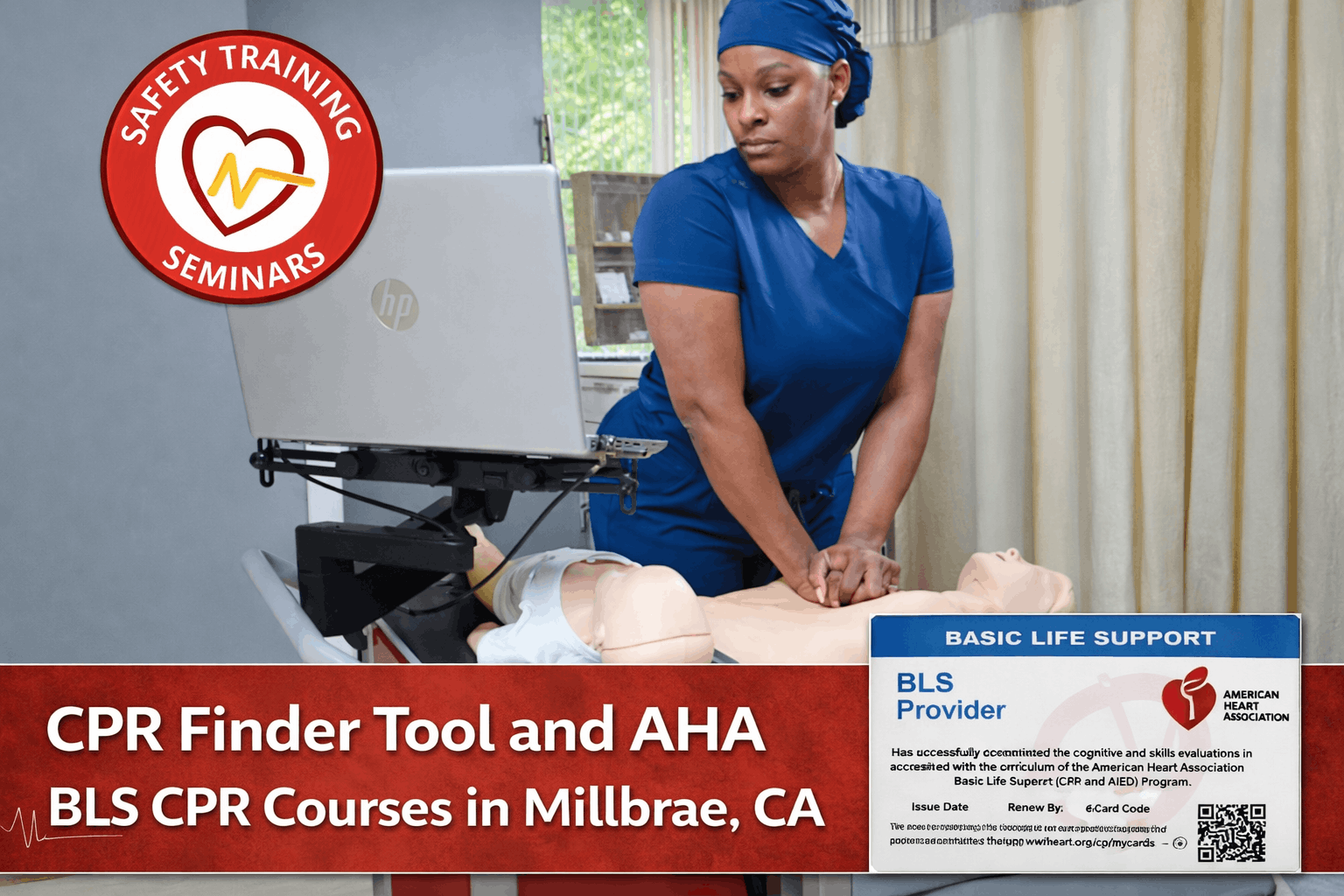
BLS is built for people whose work may call for a higher level of response than general public CPR — registered nurses, nursing and medical students finishing clinical requirements, medical assistants, dental staff, EMTs, and other clinical personnel. It covers high-quality compressions, airway management, AED use, and team-based resuscitation. Not every healthcare role requires BLS the same way, so check what your program or employer asks for. For many Peninsula clinicians, BLS and CPR classes in Millbrae are the most common starting point.
Advanced Cardiovascular Life Support (ACLS)
ACLS is aimed at healthcare professionals who help manage adult cardiovascular emergencies — often physicians, nurses in critical care or emergency settings, paramedics, and similar providers. It builds on BLS with rhythm recognition, medication protocols, and team leadership during a resuscitation. Whether you need it, and how current it must be, depends on your role and workplace, so treat ACLS as role-specific rather than universal.
Pediatric Advanced Life Support (PALS)
PALS focuses on emergency care for infants and children and is intended for providers who may treat young patients — pediatric nurses, emergency and critical care staff, and clinicians in units that regularly see kids. The self-guided route mirrors the others: independent online study, then a hands-on session. If your position touches pediatric care, confirm whether PALS is part of your requirements.
CPR, AED, and First Aid
These courses reach a far broader group than the provider tracks. Coaches, childcare providers, fitness instructors, office safety teams, caregivers, and community members often complete CPR/AED and First Aid to meet workplace rules or feel ready at home. The material is more general than BLS and assumes no clinical background. If your workplace requires training, ask which course and card they accept — some employers want a particular version.
Matching the Course to Your Role
Choosing the wrong class is a common and avoidable mistake. This quick reference shows the typical audience for each course:
| Course | Who it’s usually for |
| BLS | Healthcare professionals and clinical students |
| ACLS | Providers managing adult cardiac emergencies |
| PALS | Providers managing pediatric emergencies |
| CPR/AED | General public and workplace staff |
| First Aid | Workplaces, schools, childcare, and community members |
Use this as a guide, not a rulebook. Requirements shift depending on your employer, school, licensing board, or healthcare organization, so verify the exact course and format before registering. When unsure, ask whoever signs off on your certification.
Self-Guided, Online-Only, and Classroom Training — How They Differ
It helps to see these three side by side:
- Self-Guided Learning pairs independent online study with an in-person skills session for provider courses. You control the pace of the knowledge portion but still demonstrate skills where required.
- Traditional classroom training puts you in a scheduled session with an instructor for both the learning and the hands-on work. Some prefer the structure and direct interaction.
- Online-only training delivers everything through a screen. That can work for certain general-awareness courses, but it may not satisfy a requirement that calls for a hands-on skills check — which applies to many provider-level certifications.
No single format is best for everyone. The right one comes down to your schedule, how you learn, and what your certifying body will accept.
Why This Format Fits Many Millbrae Learners
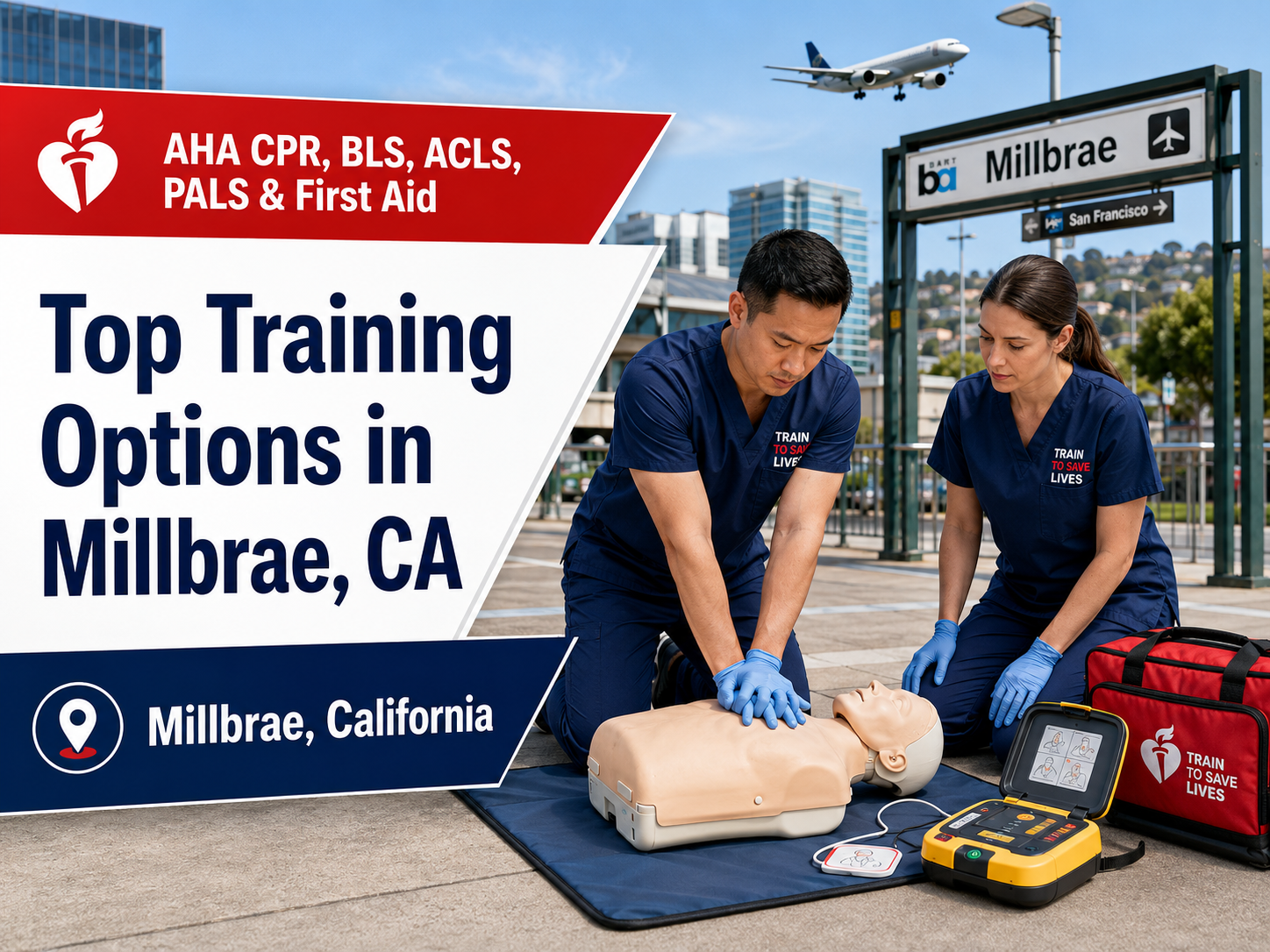
Millbrae’s location shapes who tends to reach for a self-paced option. Clinicians commuting along the El Camino corridor, students splitting time between coursework and clinical placements, and shift workers whose hours rarely match a fixed class all benefit from finishing the knowledge portion whenever a window opens. Someone traveling in from Burlingame, San Bruno, or South San Francisco can do the online part at home and reserve one trip for the hands-on session. Renewals fit especially well — when you already know the material, moving quickly through the cognitive portion and focusing on the skills check saves time. If you’re weighing provider tracks, review the local BLS, ACLS, and PALS course options near Millbrae to see what matches your role.
Safety Training Seminars in Millbrae
For learners looking into local training, Safety Training Seminars operates a Millbrae location at 475 El Camino Real, Suite 413, Millbrae, CA 94030. If you’re considering it, focus on the details that affect your certification: which course you need, whether the class covers the required hands-on skills for your role, and what card or eCard you receive on completion. Confirm the course format, and check that the completion documentation will be accepted by your employer or school before enrolling. Matching the course to your requirement matters more than anything else when deciding where to train.
Frequently Asked Questions
Does Self-Guided BLS still include hands-on skills? Yes. For BLS and other provider-level courses, you complete the online knowledge portion on your own, then finish a hands-on skills session in person. That skills check is required — the self-guided label refers to the flexible study format, not to skipping the physical component.
I commute through Millbrae — can I do the online part before my skills session? Generally, yes. The typical sequence is to complete the cognitive module first, then attend the hands-on session afterward. That order appeals to busy Peninsula commuters, since the knowledge portion can be done at home and the in-person visit kept short. Confirm the sequence with the provider for your course.
Do I need BLS or a general CPR class? It depends on your role. BLS is generally for healthcare professionals and clinical students, while CPR/AED classes serve the general public and many workplaces. If a job, school, or licensing body is requiring the training, ask which course and card they accept so you don’t complete the wrong one.
Can someone from a nearby city use the Millbrae location? Yes. Learners from Burlingame, San Bruno, South San Francisco, and other neighboring communities can train at a Millbrae center, and its position as a transit hub often makes it a convenient meeting point. It’s still smart to confirm course availability and scheduling before you make the trip.
Is online-only training enough for a healthcare job? Often not. Many provider-level roles require a hands-on skills check that a fully online course can’t provide. If your position calls for BLS, ACLS, or PALS, verify whether an online-only certificate is accepted — in most clinical settings, it isn’t sufficient on its own.
Choosing Your Next Step
The distinction to hold onto is a simple one: Self-Guided Learning still includes the hands-on skills that many certifications require, while an online-only course may not. Before you register anywhere in Millbrae, pin down which course your employer, school, or licensing organization requires, then confirm the format you choose covers those hands-on skills. Once the requirement is clear, reviewing what Safety Training Seminars offers locally — and matching it to your role — makes the rest straightforward.